

I didn’t get vaccinations before going to SE Asia and somewhere along the way I caught the “must-see-everything” bug. That’s how I ended up with a crazy whirlwind itinerary in Myanmar that included 3 marathon night-bus rides, a 40km trek, 8 different sleeping arrangements, 1 nasty stomach flu, and 1 night on the airport floor all in the span of 10 days.
Preparing to go to Myanmar is arguably more difficult and complicated than actually being there. Aside from the visa issues in Bangkok, we also have to find crisp and clean US Dollars to bring because apparently in Myanmar, foreign bills become void if you crease, fold, rip, mark, or use them in any way except as bookmarks. Luckily, a bank in Siem Reap had the “new dollars” we needed. I used to suspect that people with a pocket full of $100 bills were drug dealers. Now I know they’re just people who recently came from Myanmar, the holder of all our clean money.
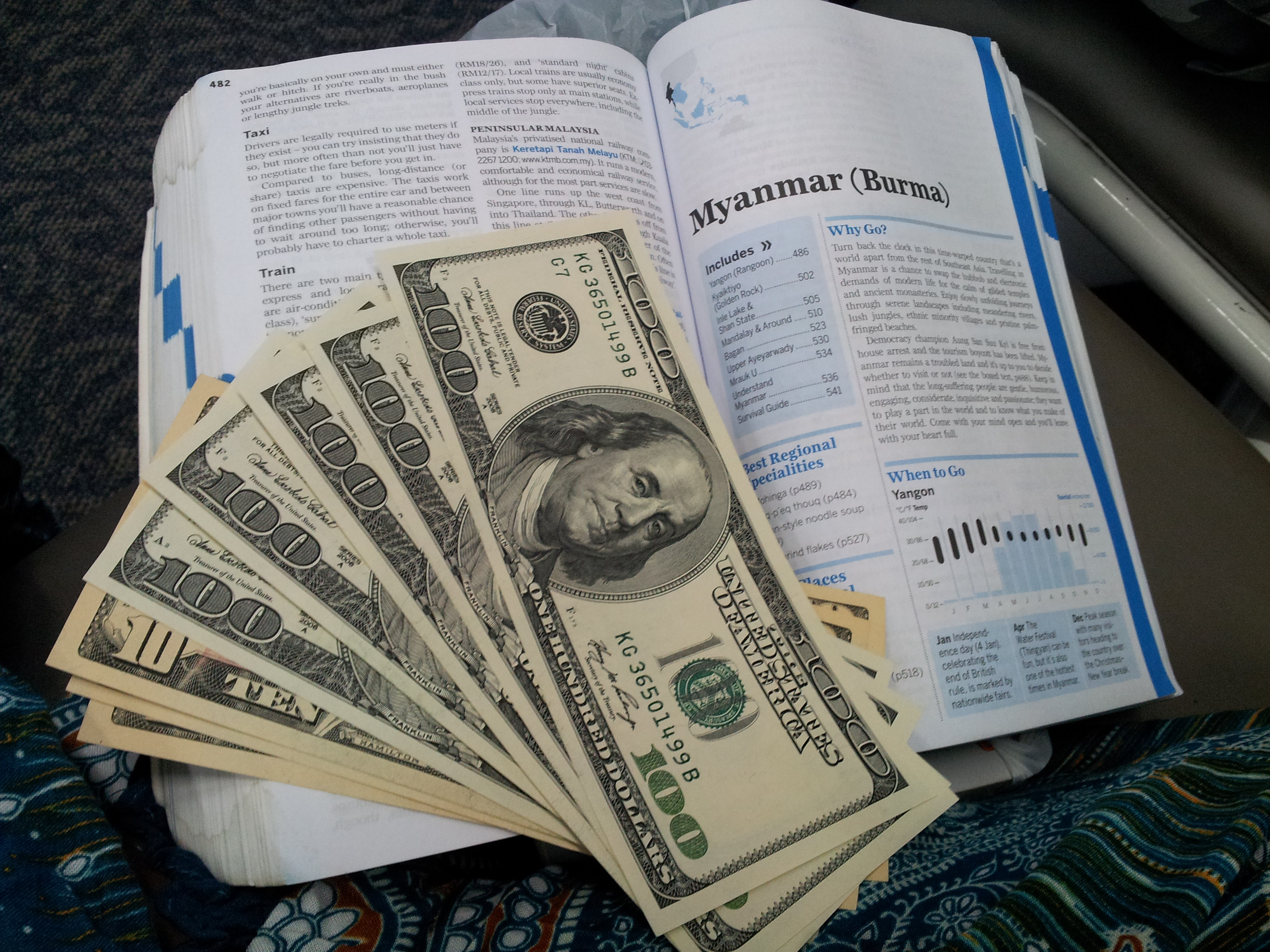
Twenty years in America and I’ve never had dollar bills this crisp and clean.
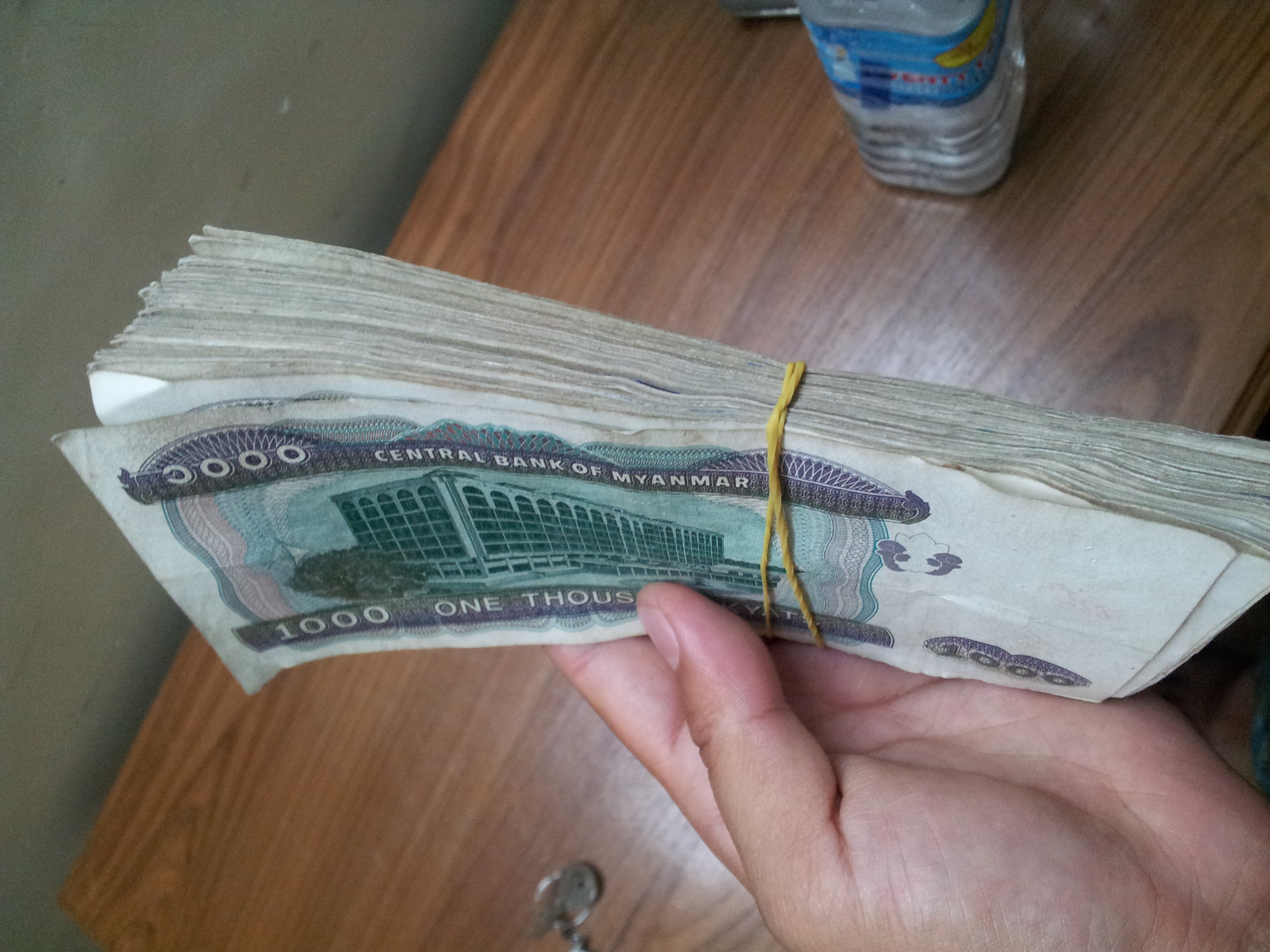
Converted into Kyat. I’ve also never carried around this many bills in my life.
Burdensome visa and forex rules aside, even given the fact that most of the people don’t speak English, Myanmar is a relatively easy and painless place to travel. That is because the Burmese people are so, SO nice. Our first day in Yangon, we walk into a travel agency next to our hotel and ask them to plan our 10-day itinerary. Because we’re traveling during the Water Festival (akin to Christmas time in the US), many trains and buses are closed or booked. The travel agents spend six straight hours tirelessly arranging our entire trip, from every bus and hotel to when and where our tickets would be dropped off. We make impossibly annoying requests and they meet every single one with a smile.
A typical conversation:
Us: We want to take a bus to Mandalay on the 15th.
Agent: No buses because of Water Festival.
Us: So there’s no way to get there?
Agent: You can take airplane.
Us: No, that’s too expensive. There has to be a bus. How are the local people getting around?
Agent: Ok, I try, but I don’t know because it’s the Water Festival…
Agent spends 30 minutes on the phone talking in Burmese
Agent: Ok, you can take this bus, arrive in Mandalay on the 15th.
Us: Really? I thought you said there were no buses because of the Water Festival?
Agent: Yes, I just talked to my friend. There’s bus.
You can always get by with a little help from friends. That evening we hop on a night bus to Kalaw.
Here’s the thing about night buses
They are a necessary evil for budget travelers. On the surface, they appear to be the cheapest way to get from point to point while saving time and money on a night’s accommodation. Win-win, right? Not quite. The reality is that they are painfully long and loud. The bus driver blares karaoke music through the speakers at all hours of the night and makes random pitstops without telling you where you are or how long you’ll be stopped there. You never get any sleep because it’s so loud and uncomfortable, and you always arrive at the final destination around 5 am with a swarm of tuk-tuk drivers ready to pounce on you in your most vulnerable and sleep-deprived state. In Malaysia, bus drivers blast the AC so high you’re forced to put on every piece of clothing you packed. In Laos, they don’t make real bathroom stops so women need to either refrain from drinking anything for the entire ride or squat and pee on the side of the road with the men. And the Myanmar night-bus specialty is this:
Blasted nonstop on the TV all night. No exaggeration. When I search for these music videos on YouTube, I actually recognize the songs from hearing them so many times on the bus. And yes, that really is how Burmese women dance.
We’re told the bus ride from Yangon to Kalaw takes 8 hours. About 10 hours in, I wake up J convinced that we’ve missed our stop. We haven’t, and finally arrive in Kalaw at 4 am, after 11 hours on the bus. A man is there waiting for us. He works for the tour company we booked our Kalaw-Inle trek with and he’s been waiting alone in the dark on the side of the road for hours just to greet and walk us the few blocks to our hotel. The customer service in this country is unparalleled.
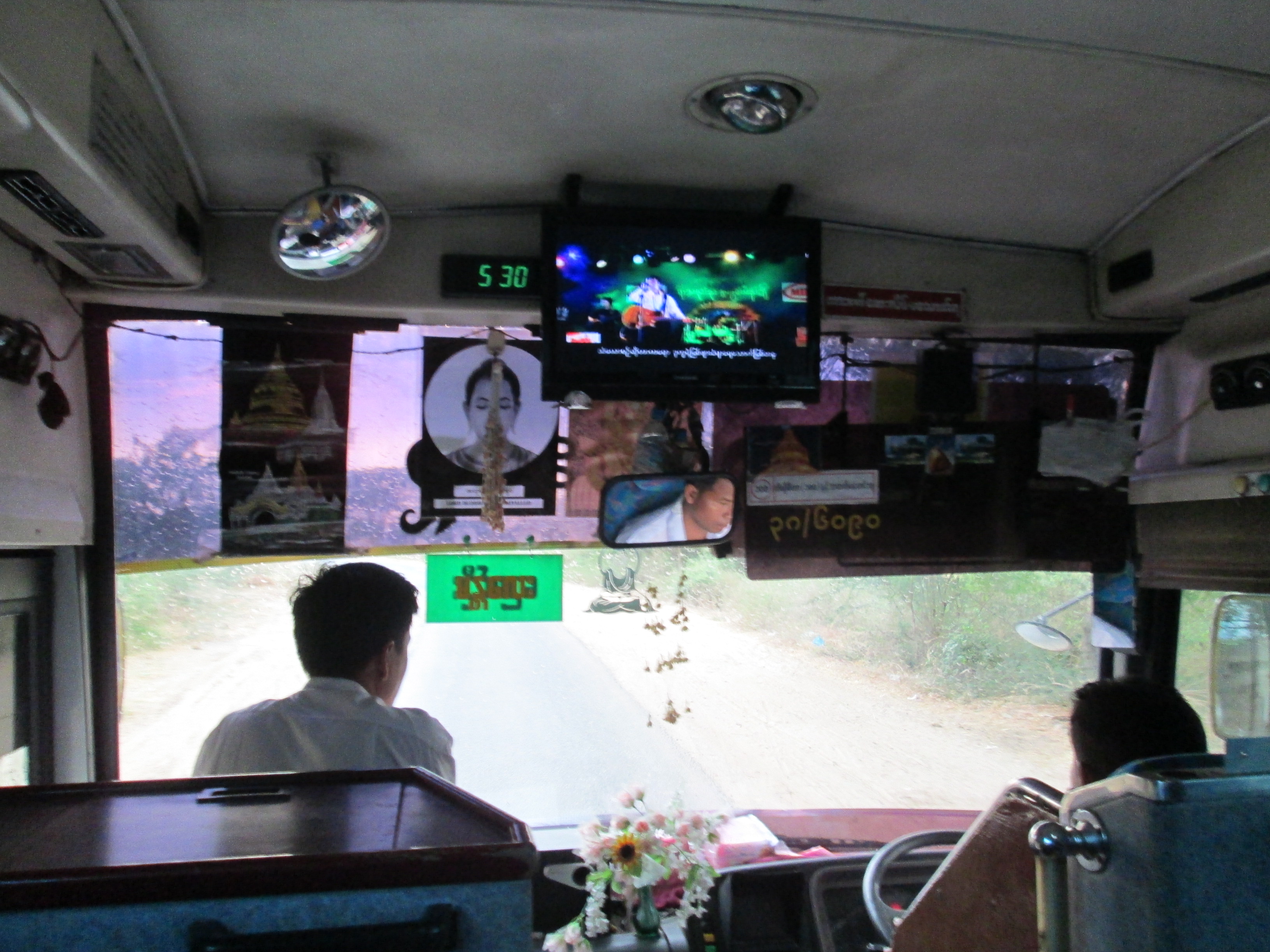
The dreaded karaoke TV screen. Also notice: In Myanmar the steering wheel is on the right side of the car but you also drive on the right side of the road. Yeah…
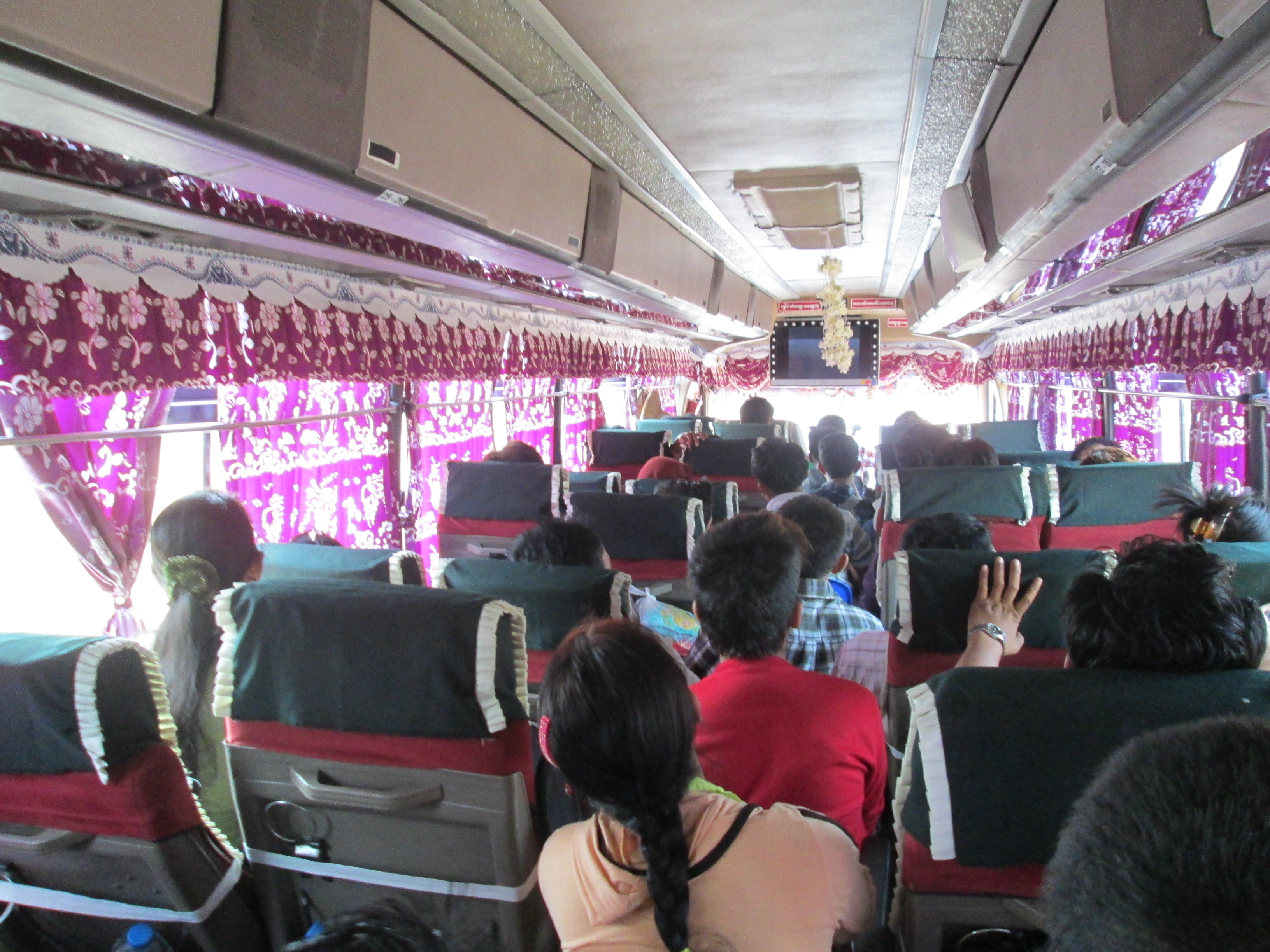
Another packed bus ride. This one was during the day, but you get the general ambiance.
Kalaw & Inle Lake
We spend two days trekking from Kalaw to Inle Lake with a great local guide named Krishna and then another two days visiting Inle Lake. It’s the end of dry season so everything is caked in a dusty yellow, but the scenery is still beautiful. We trek through countrysides and villages, where it seems every child in every house runs out to greet us. We spend a night in a monastery, where I embarrass everyone by getting lost in the middle of the night and accidentally barging into a room of sleeping monks. They’re kind enough to show me back to my sleeping quarters and not tell the buddha. At Inle, we charter a boat tour for the day and see floating villages, colorful pagoda markets, lotus weaving centers, and the famous fishermen and long-necked women. It’s a touristy route but worth doing nonetheless.
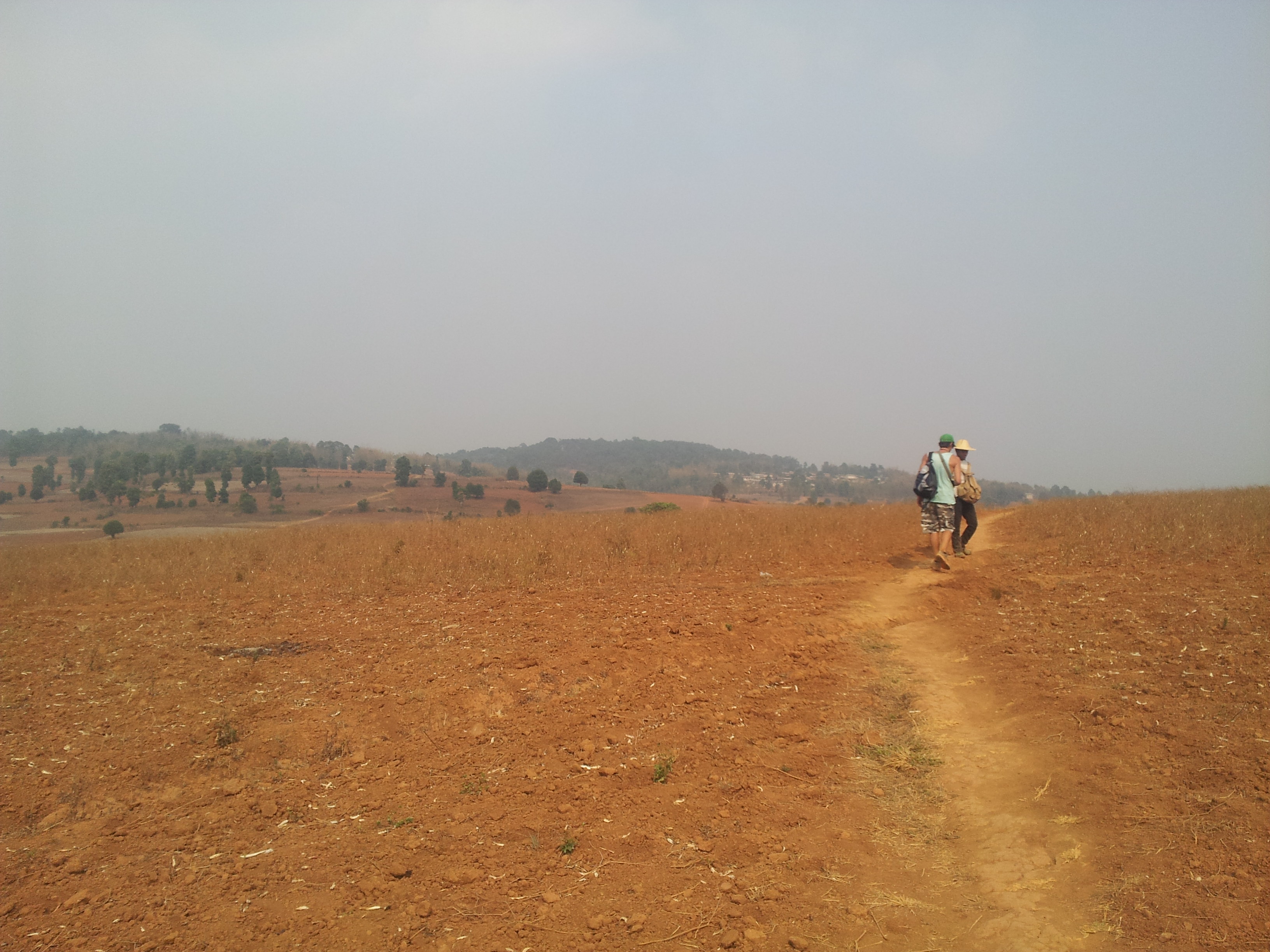
J & Krishna. Kalaw-Inle Trek.
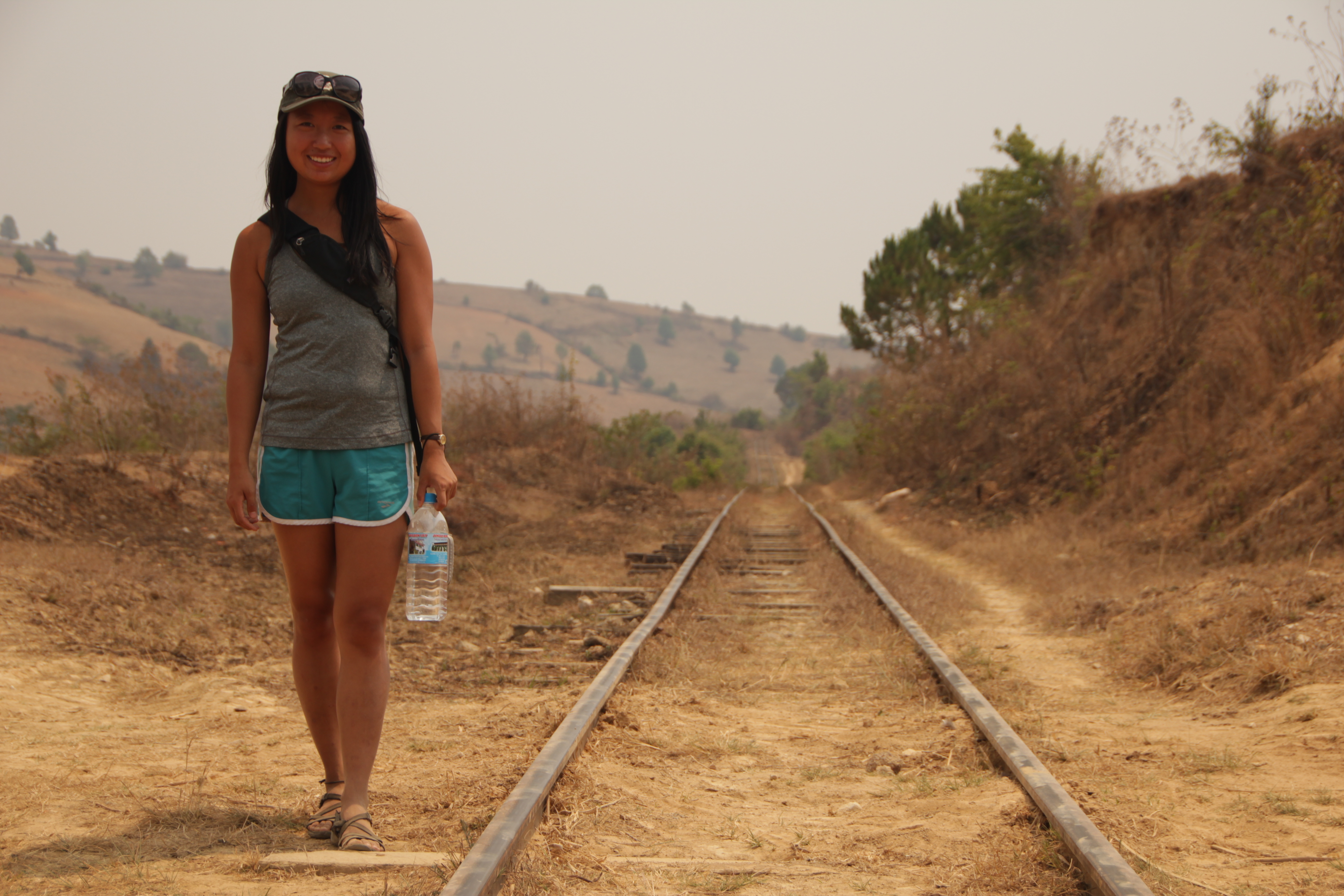
Old railway on the Kalaw-Inle trek (Photo credit: Jorge Gomez)
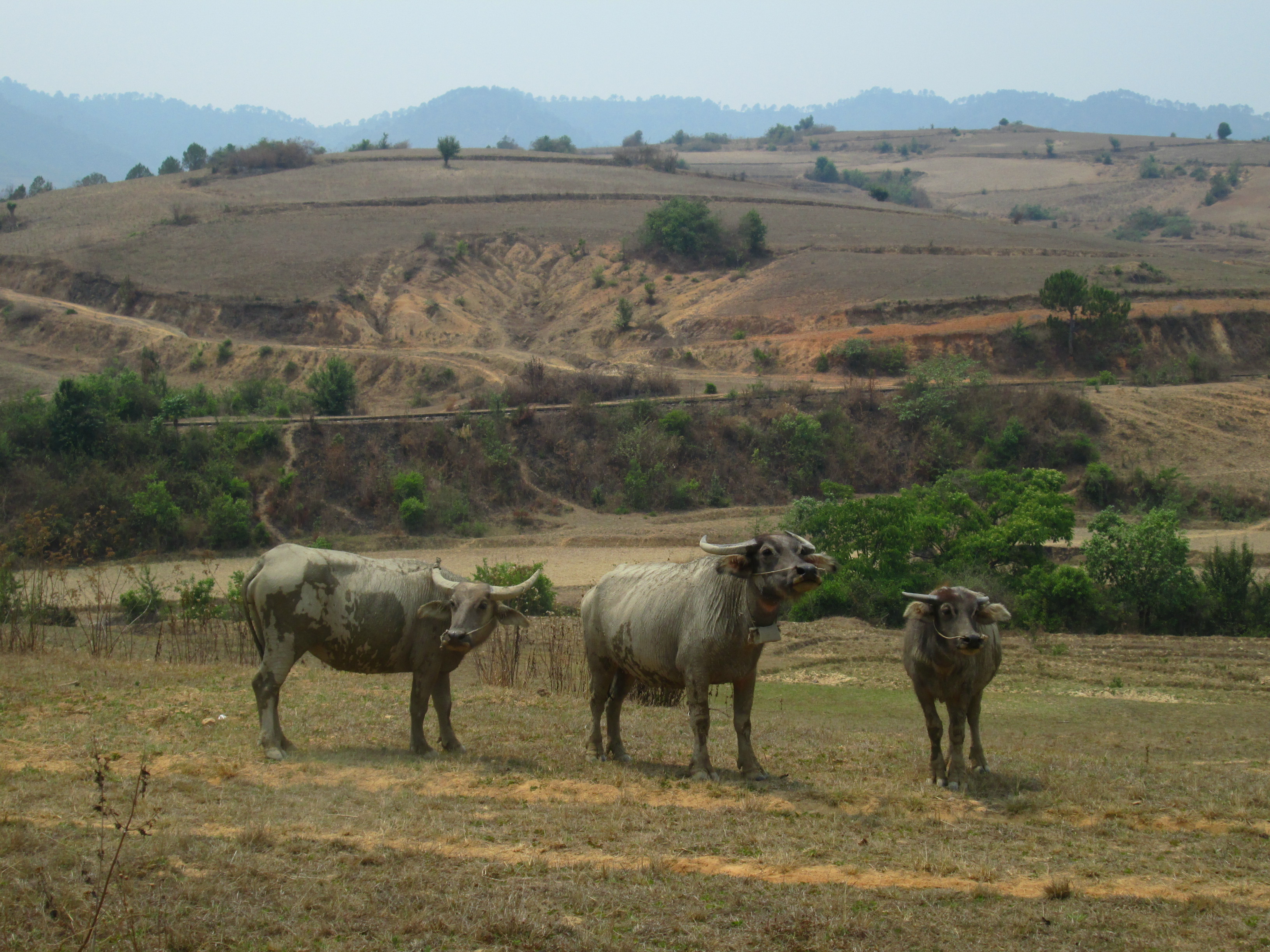
Kalaw-Inle trek
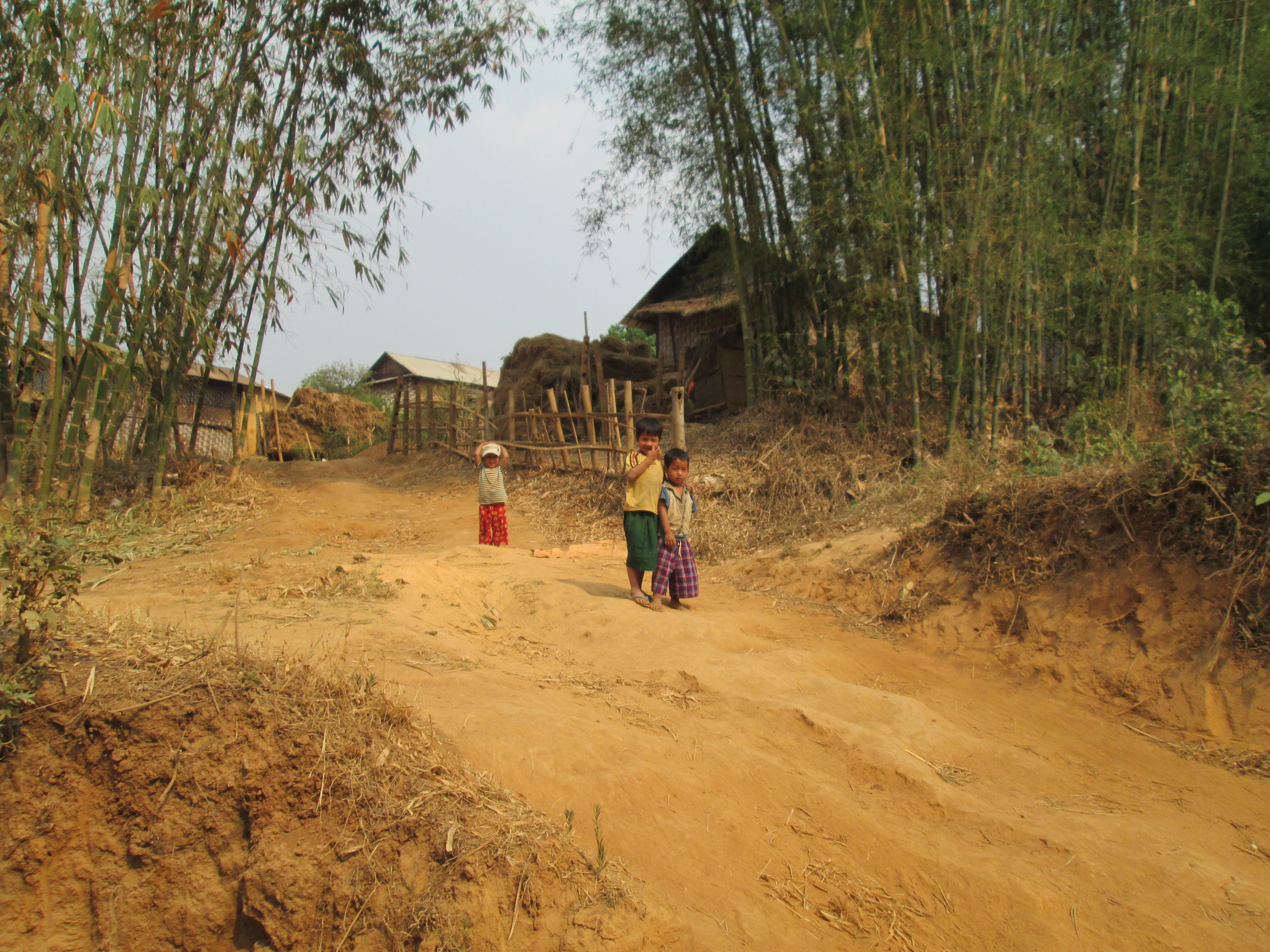
Passing by villages and children coming out to greet us.
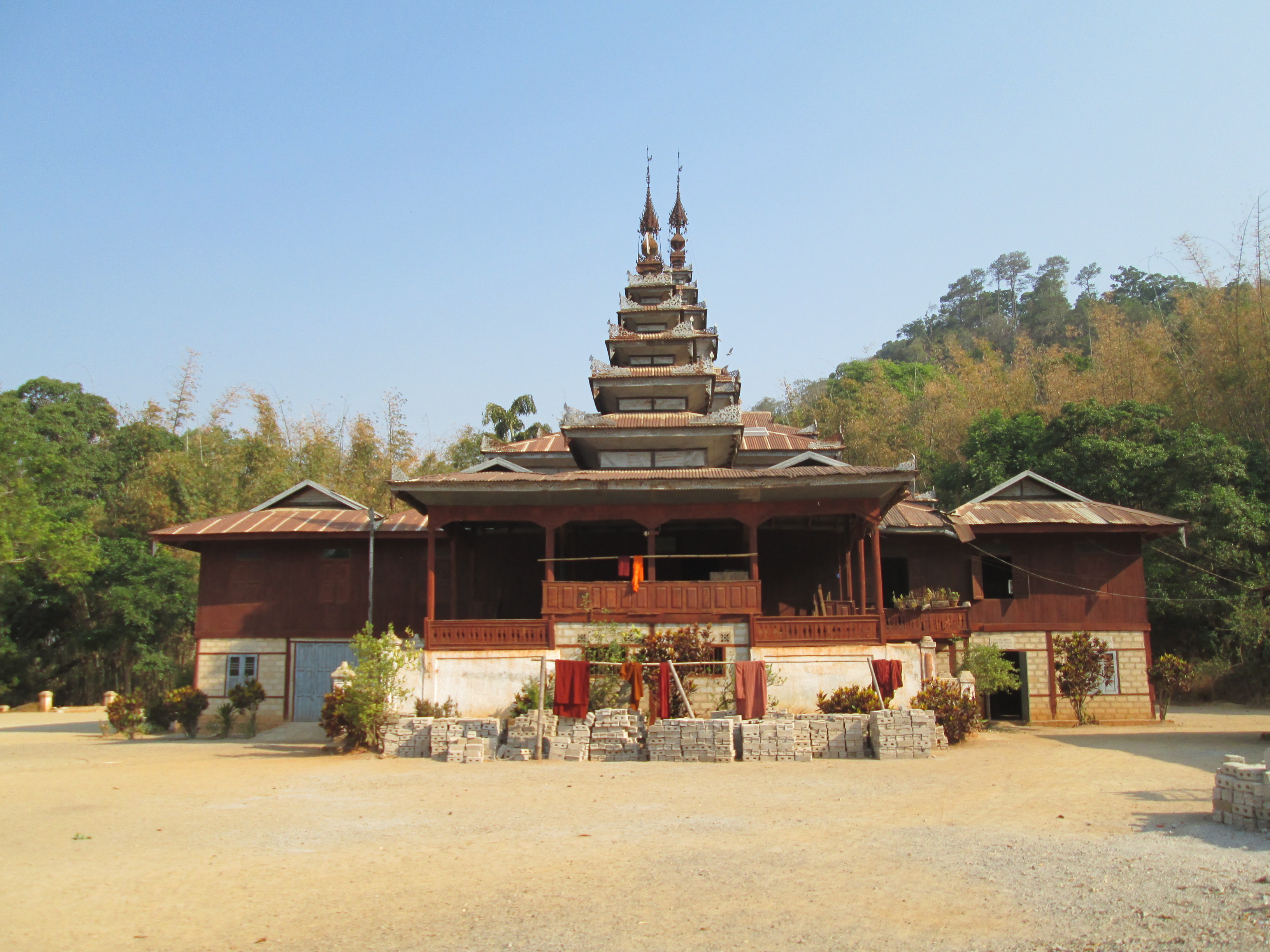
The monastery where I’m sure I will never be invited back.
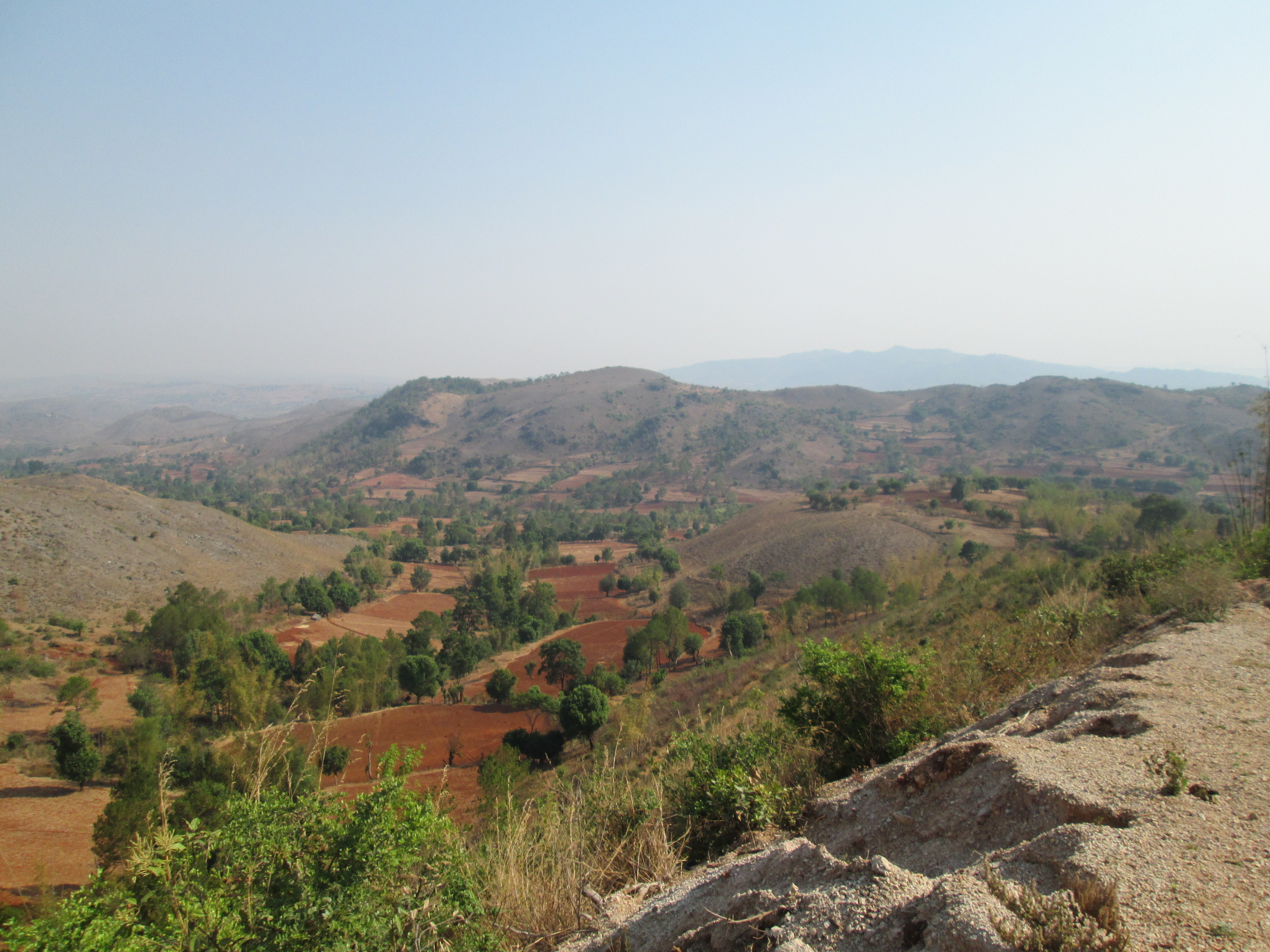
Fantastic view from the monastery
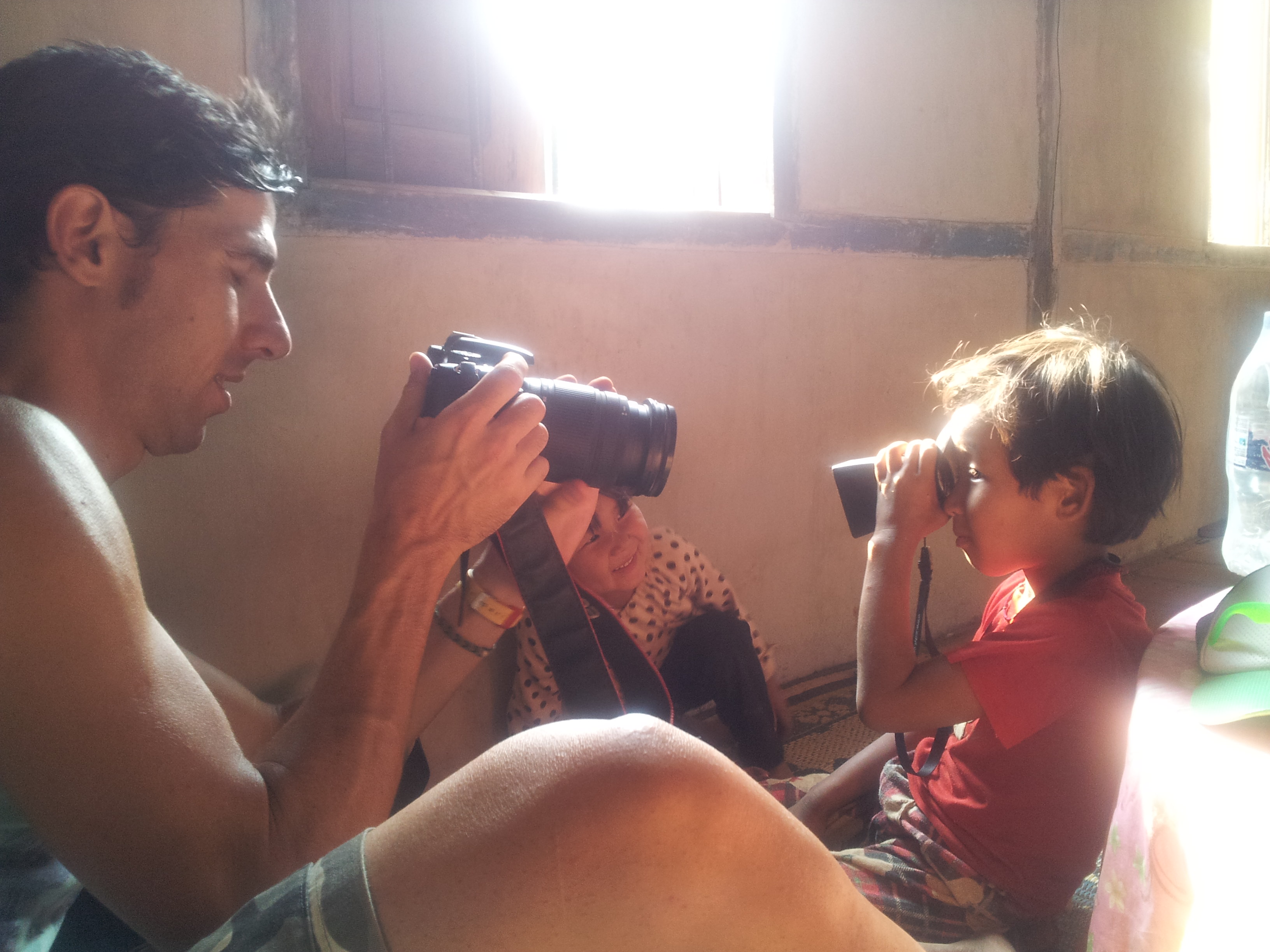
Playing with the kids during a lunch stop
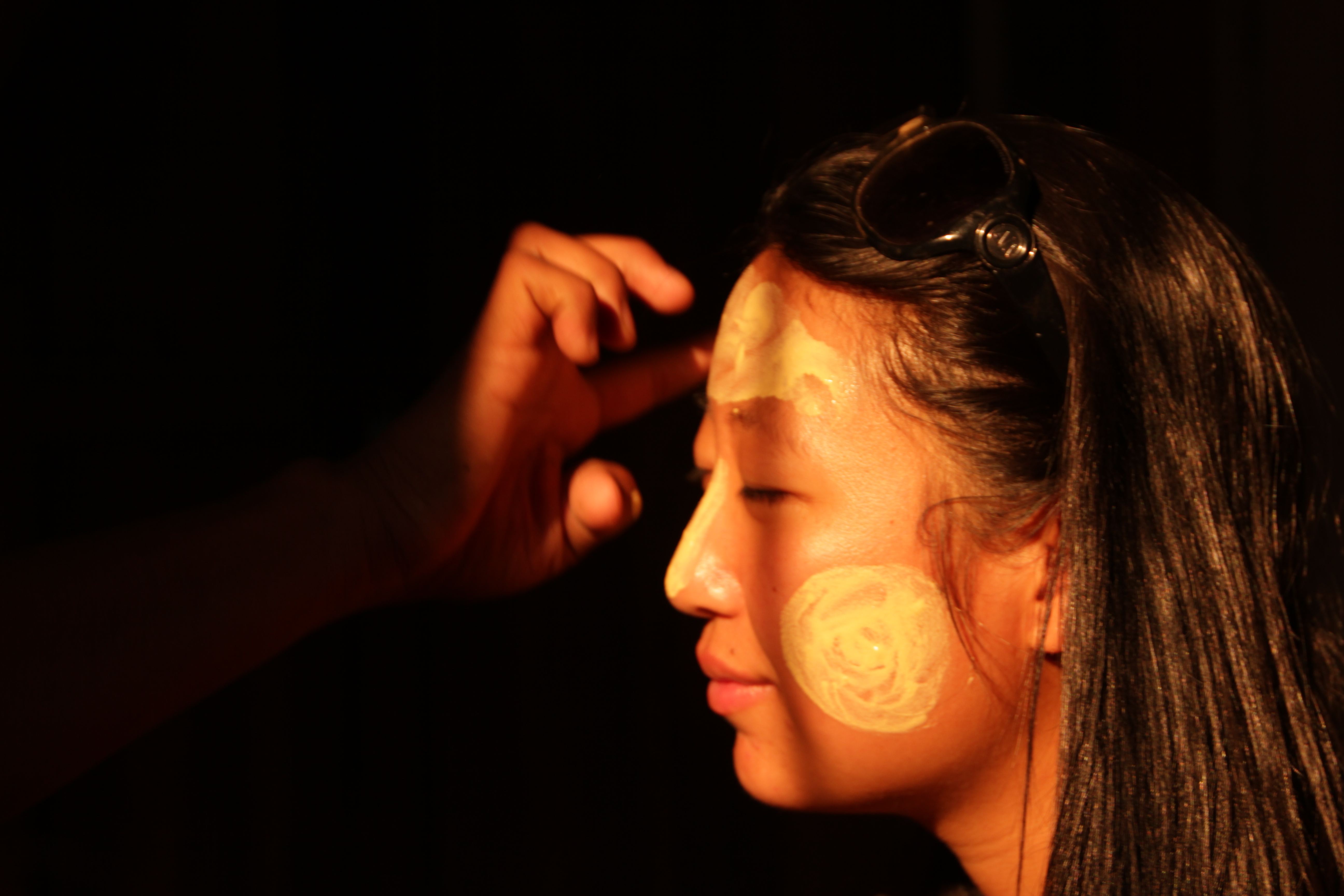
Krishna helping me apply Thanaka, a paste made from tree bark that Burmese people wear for beauty, keeping cool, and protection from the sun. (Photo credit: Jorge Gomez)
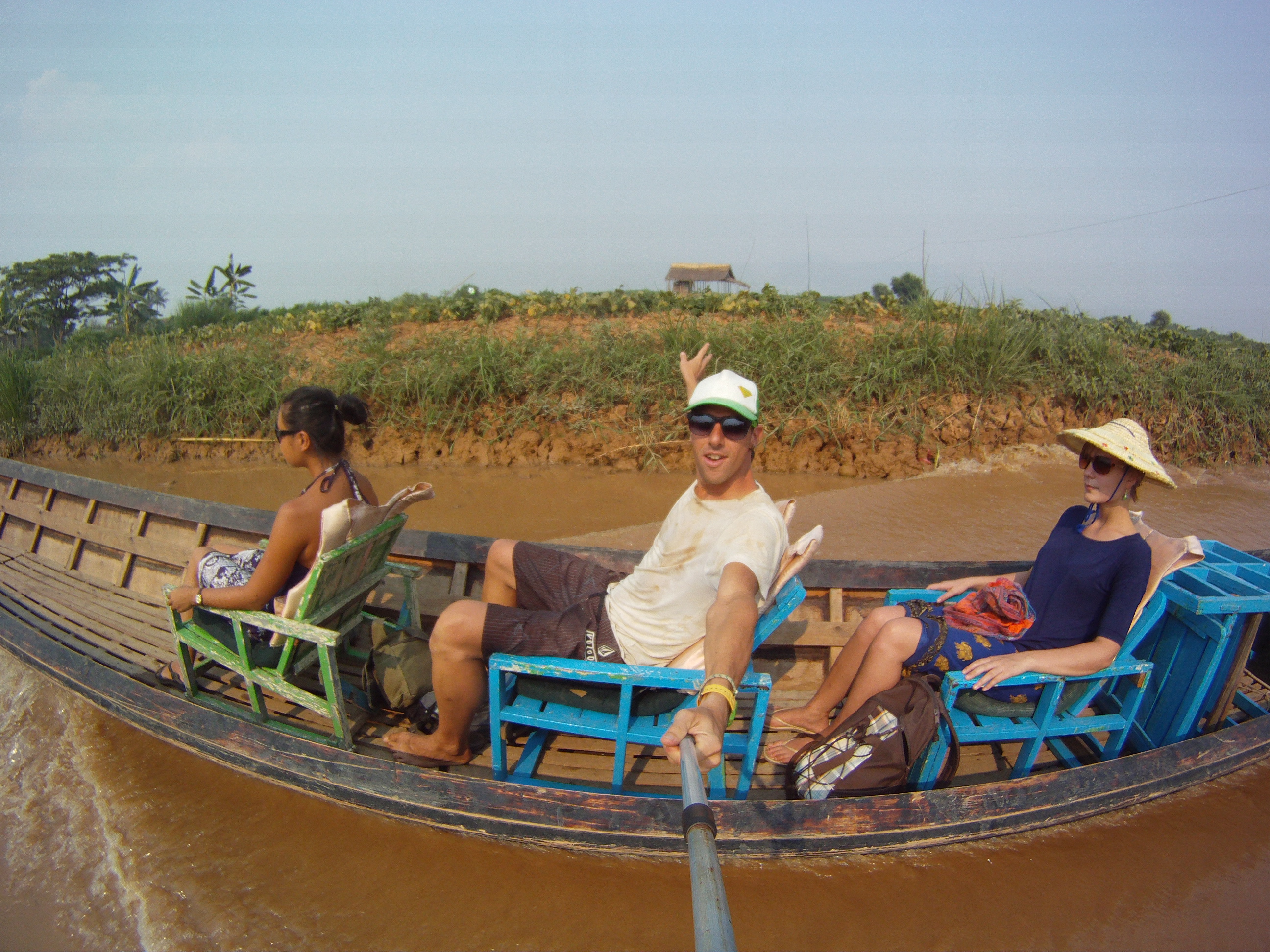
Boating on Inle Lake (Photo credit: Jorge Gomez)
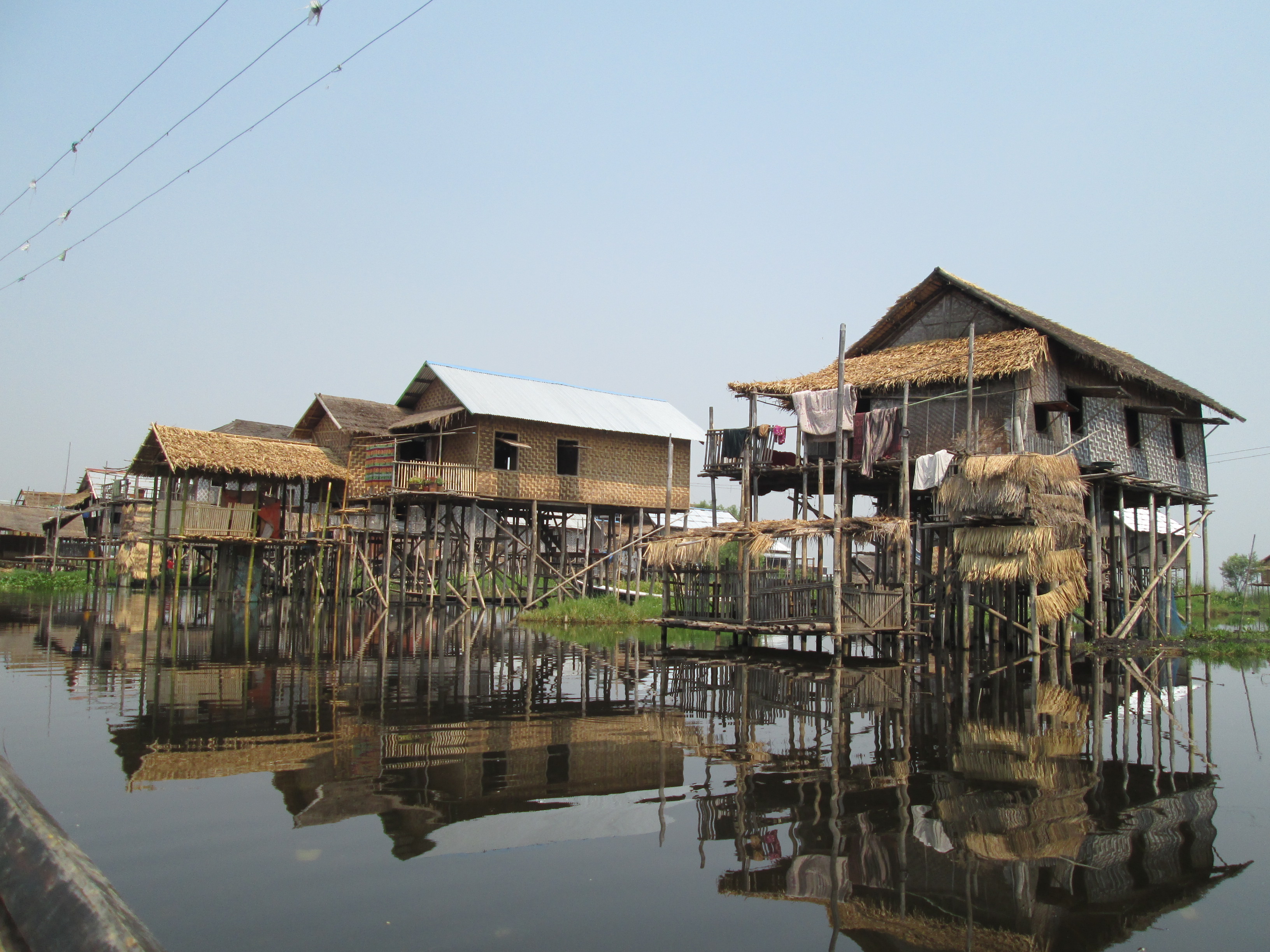
Floating village
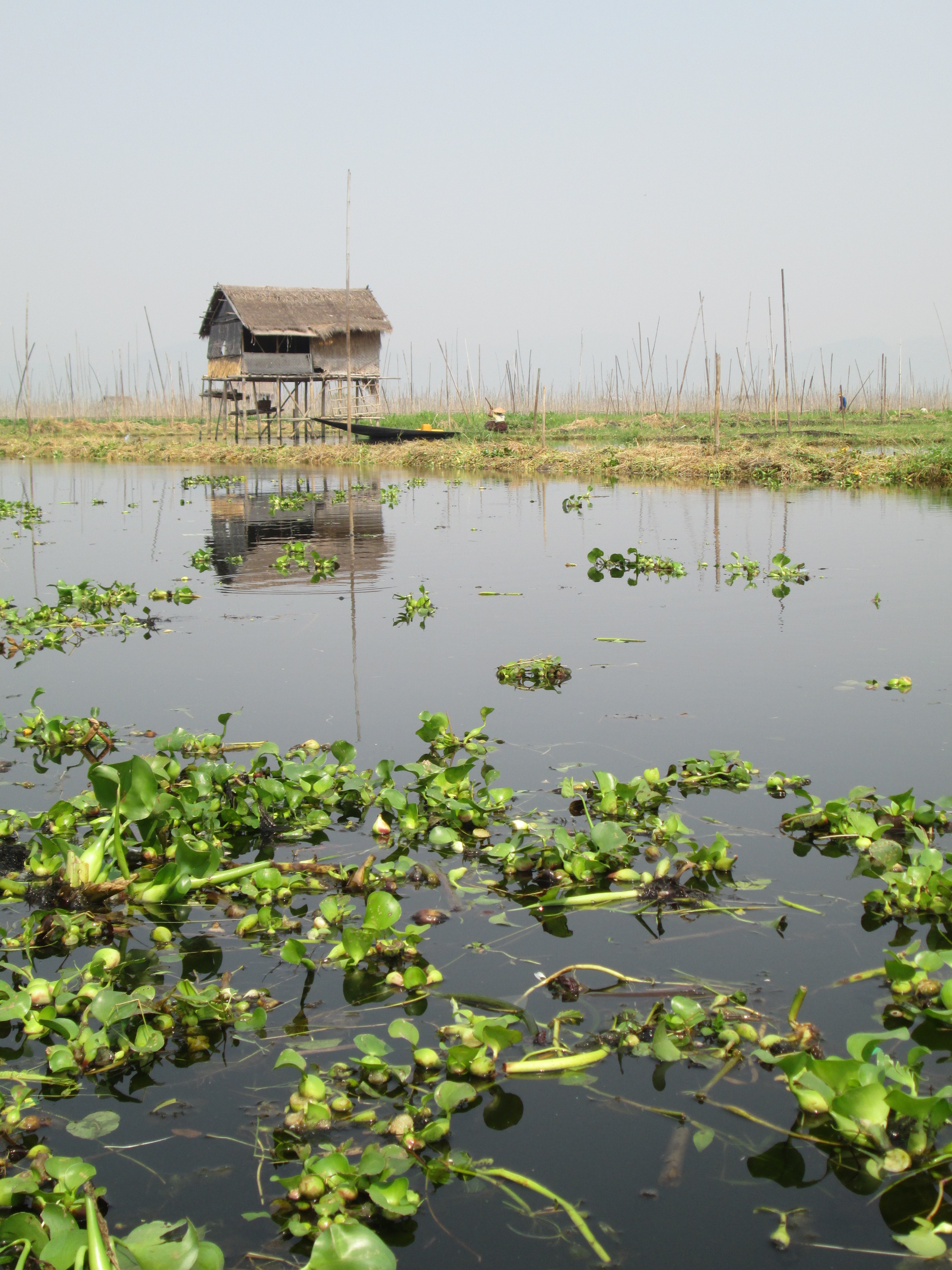
Tomato farms on Inle Lake
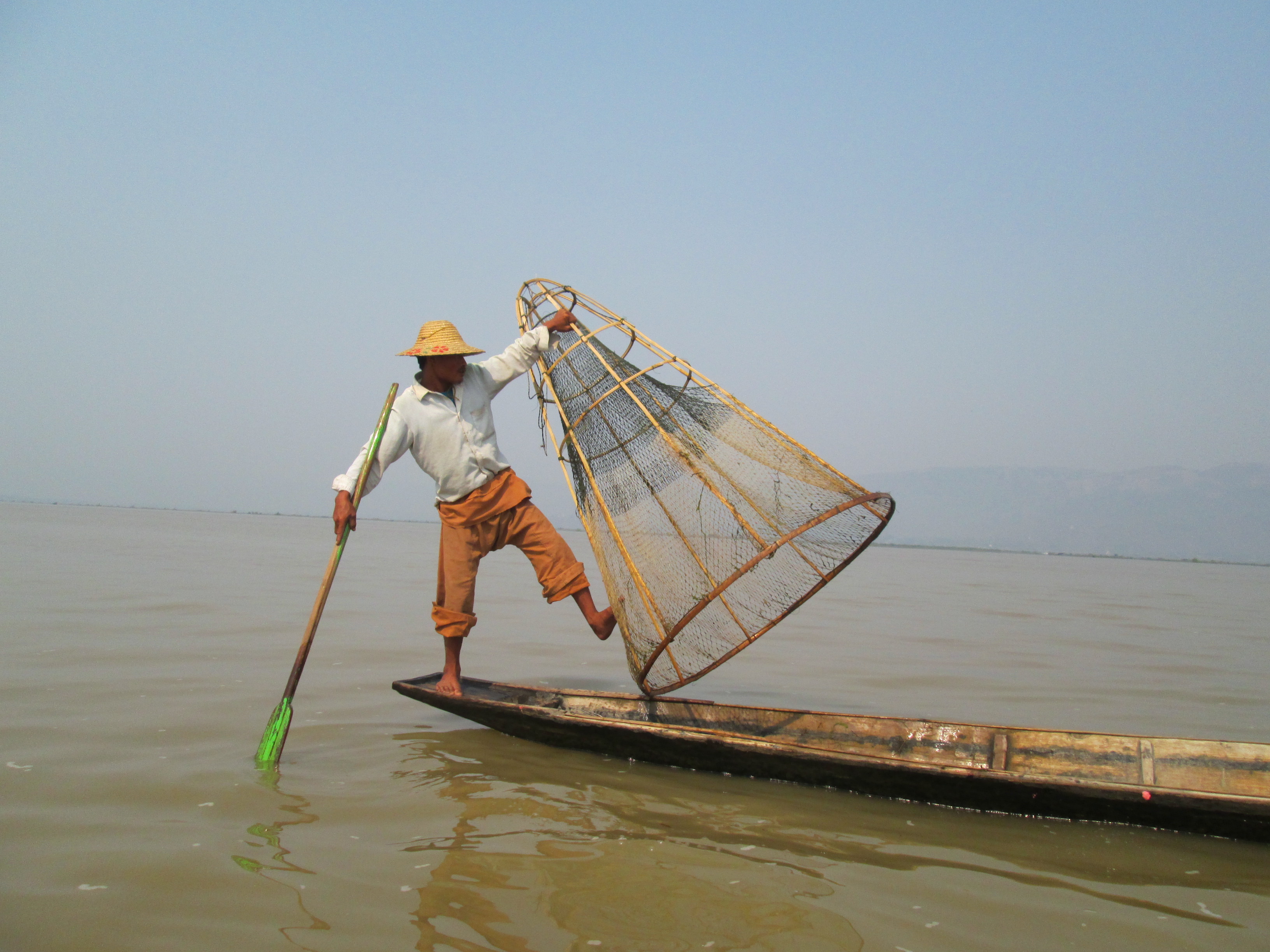
Fisherman posing for us
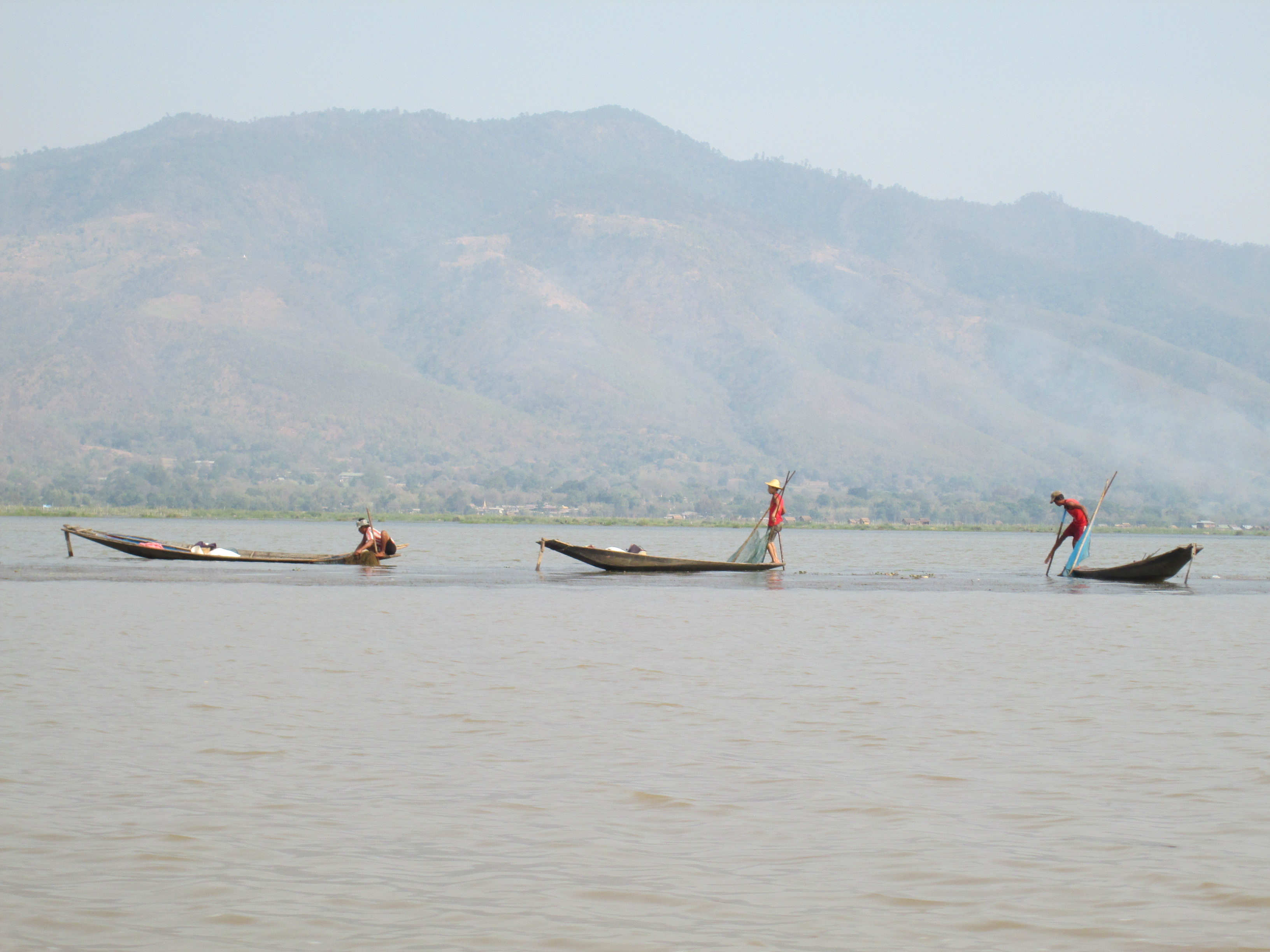
More fishermen
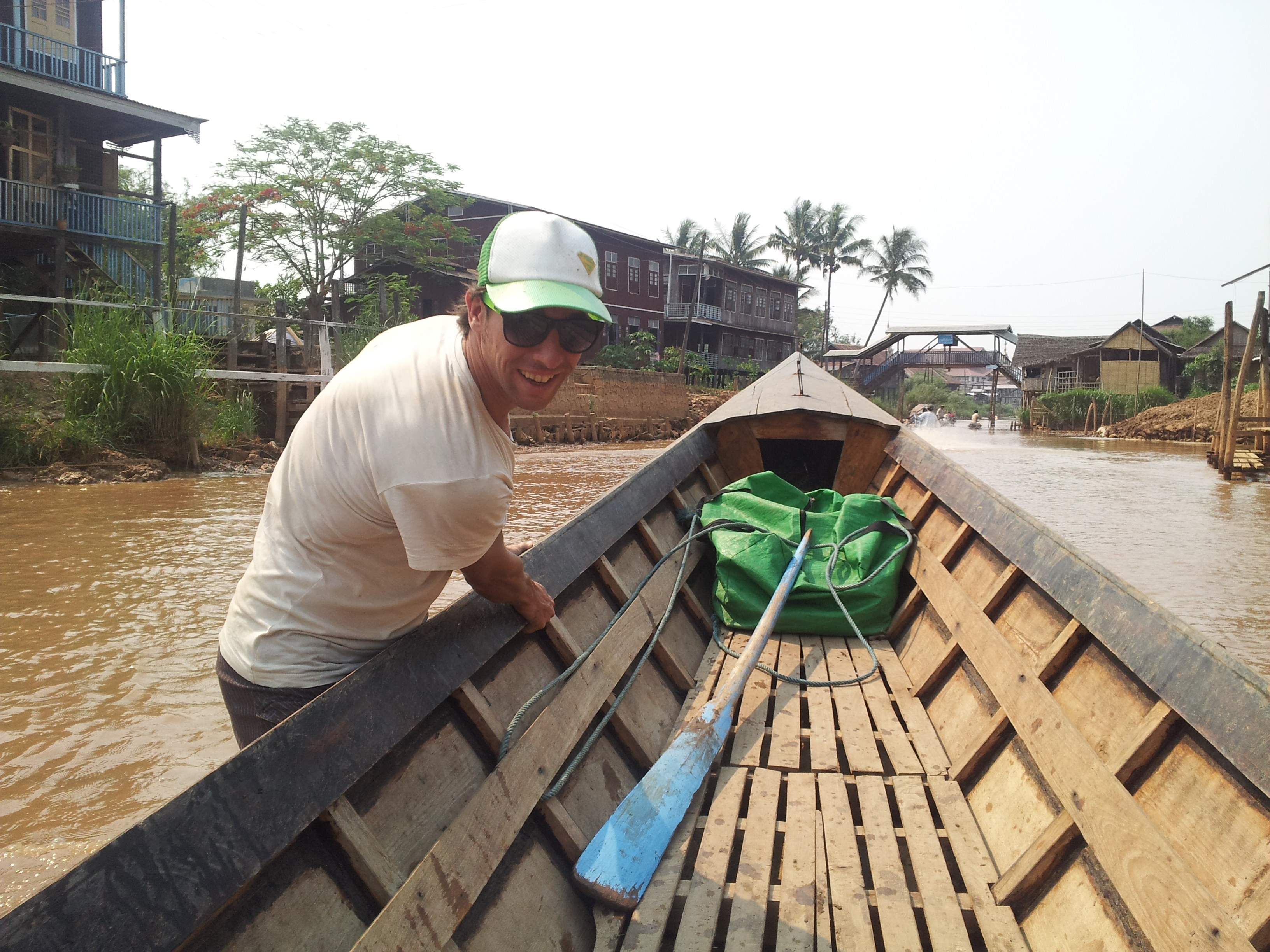
During dry season the water is really low. At one point J has to get out and help push the boat.
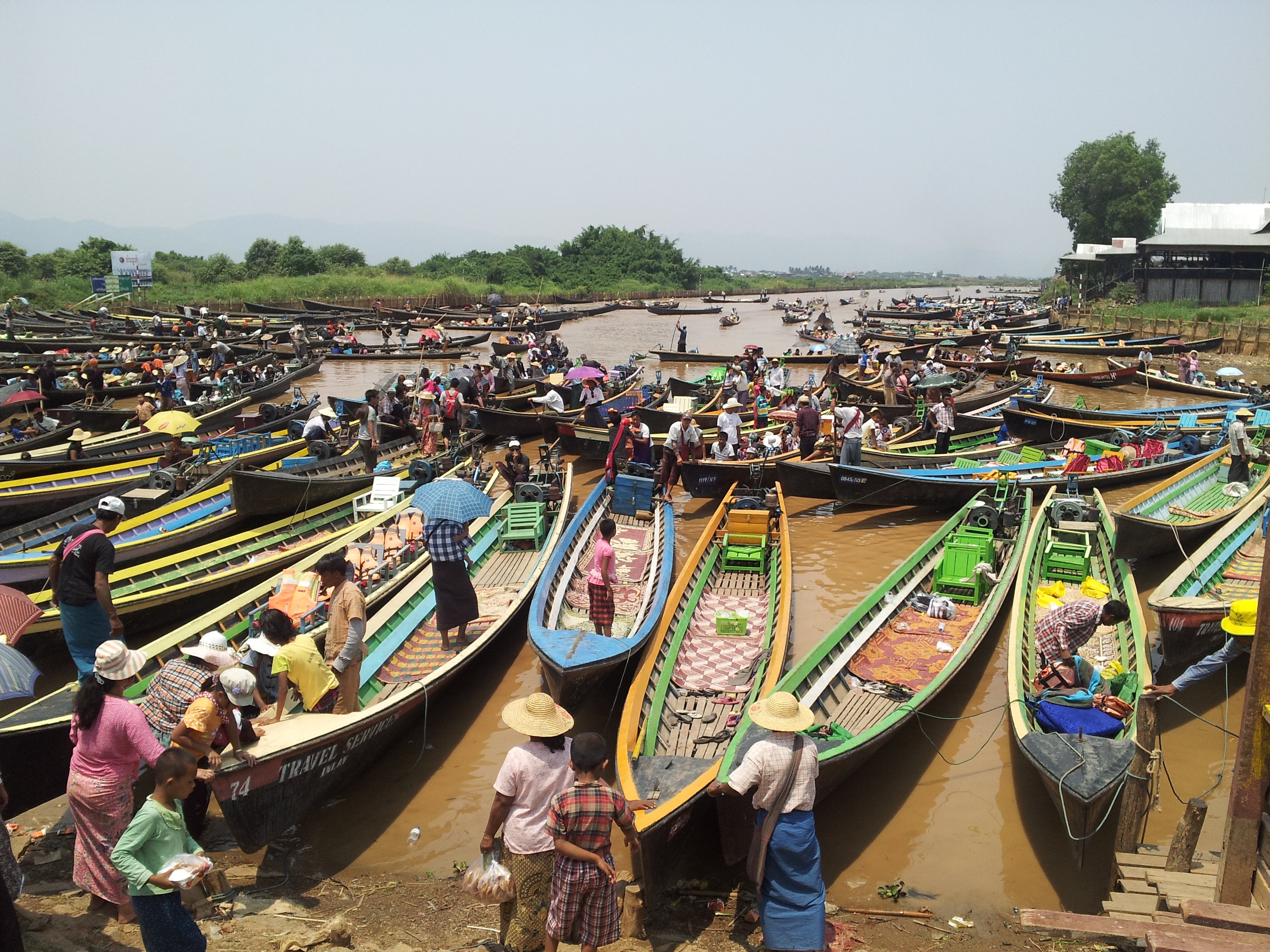
Finding parking at the pagoda market can be tough
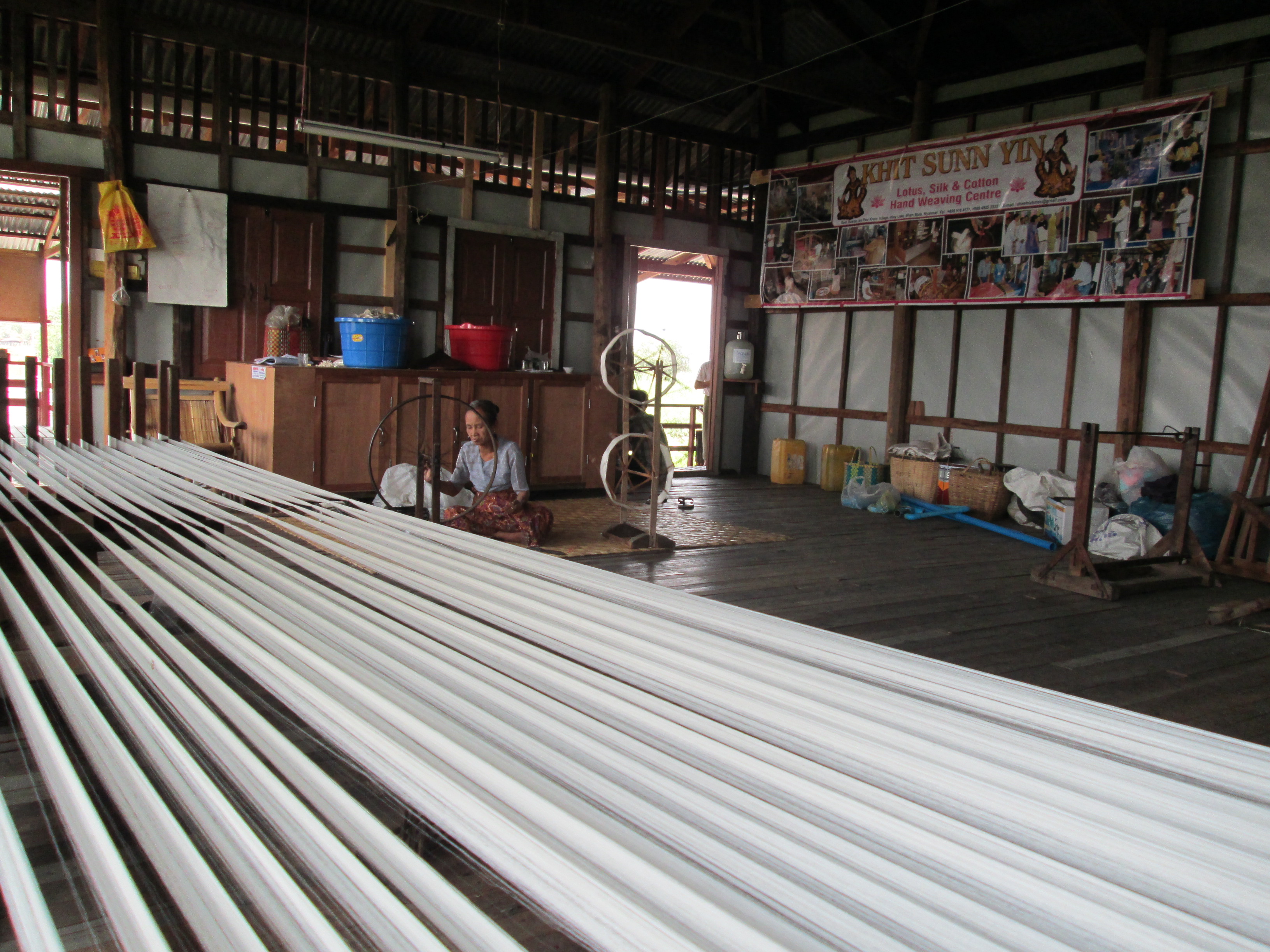
Lotus weaving center
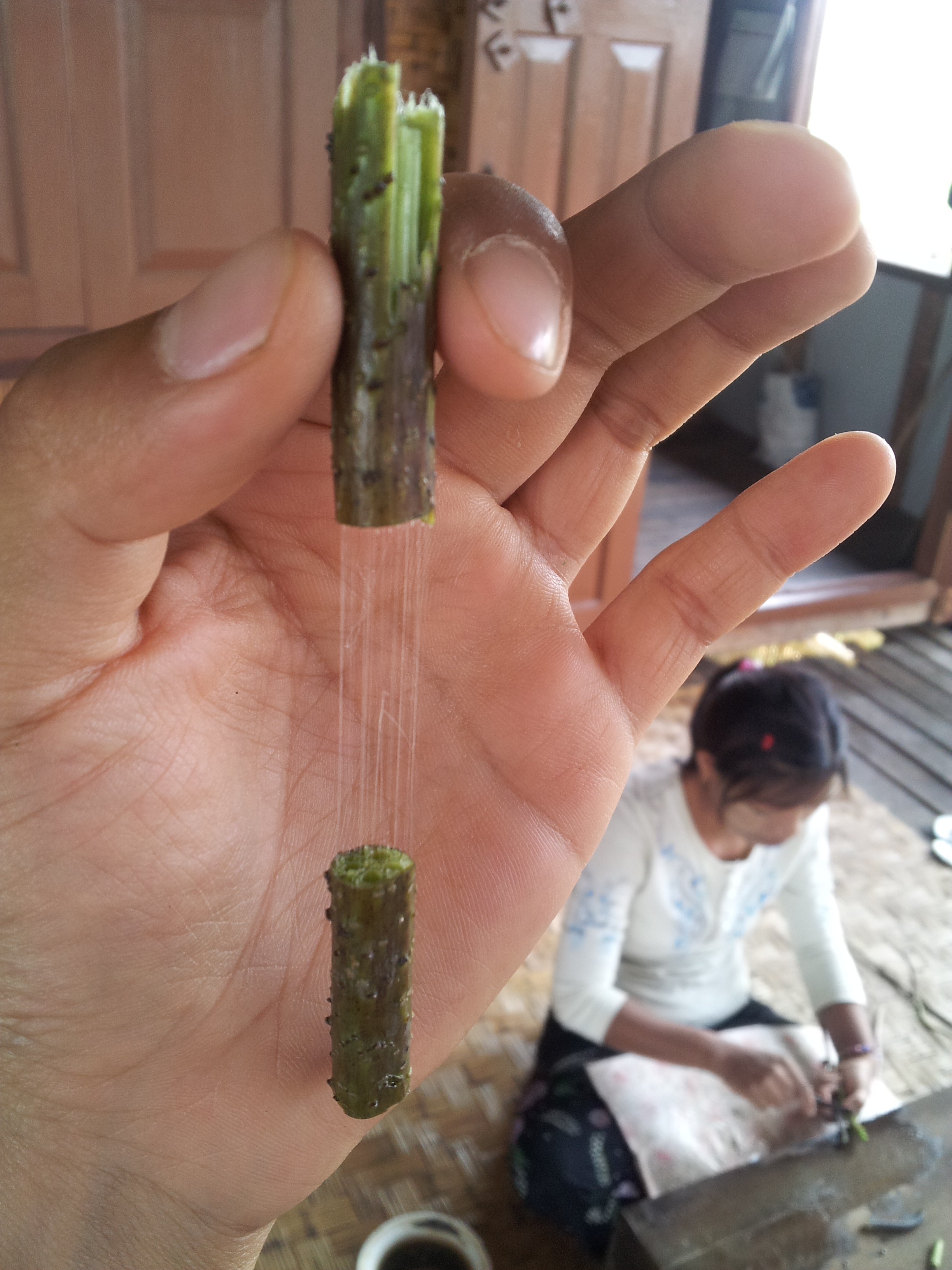
This is what they use to weave. So interesting!
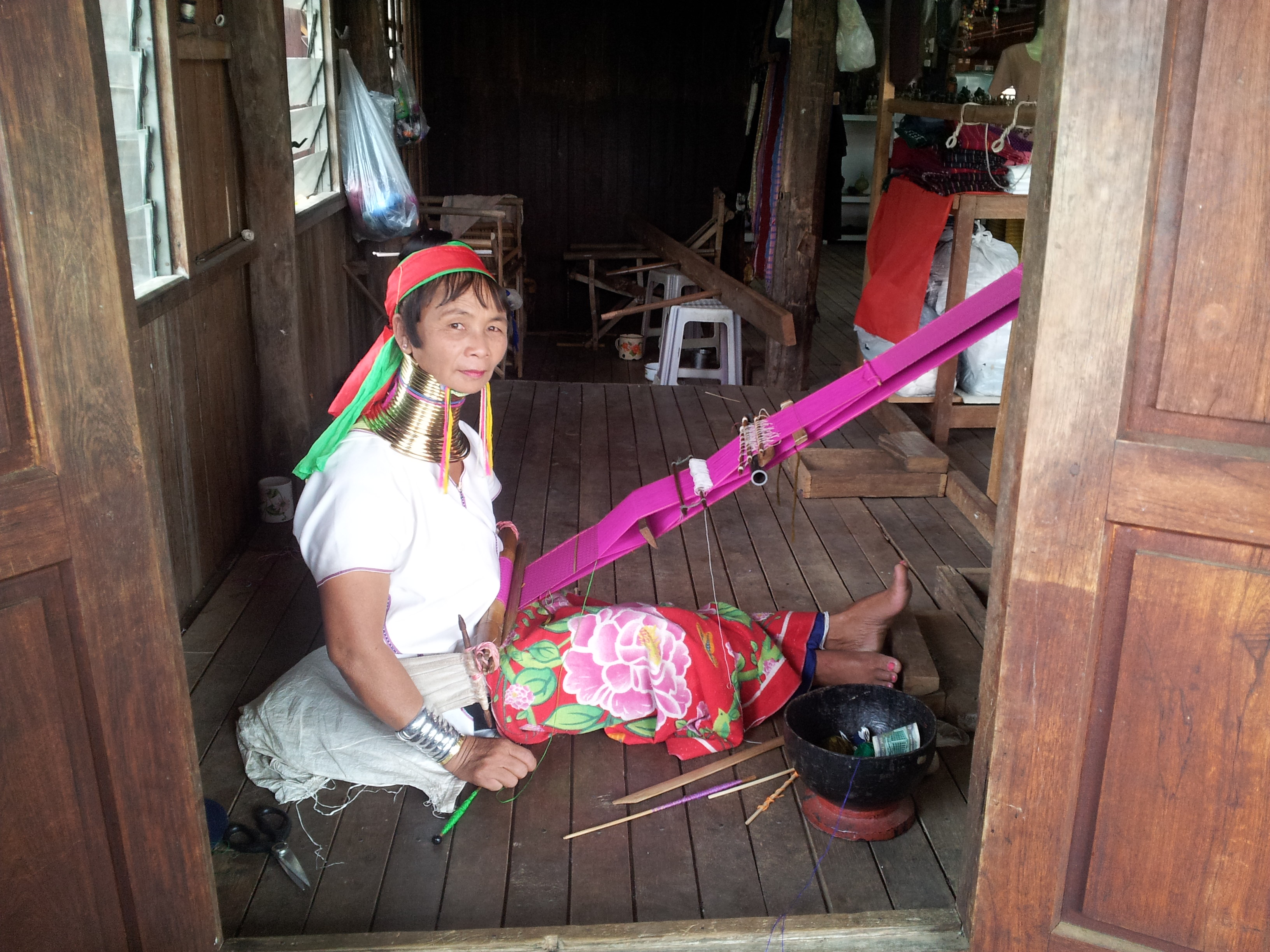
A long neck lady
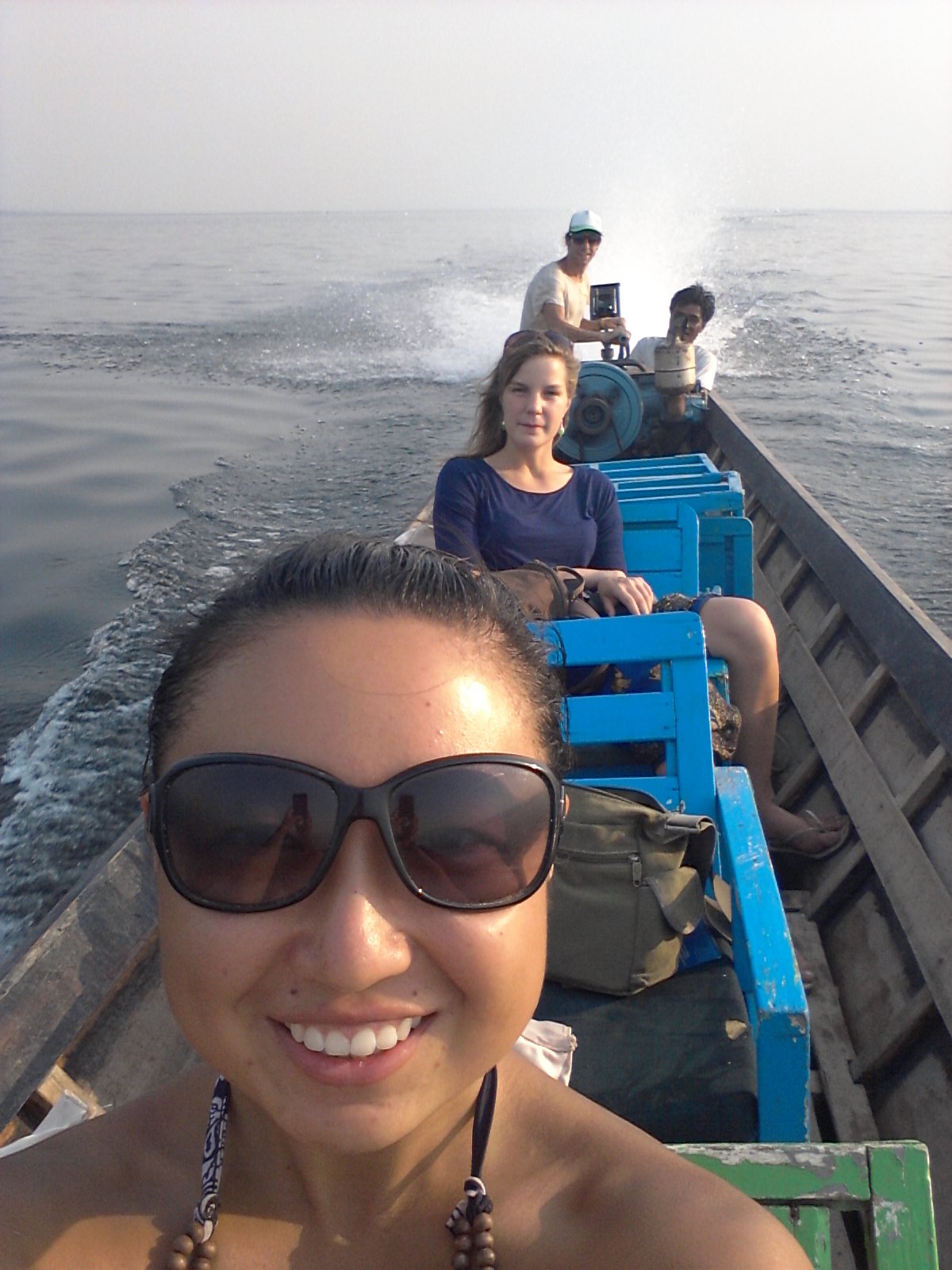
J “persuades” our driver to let him steer us home.
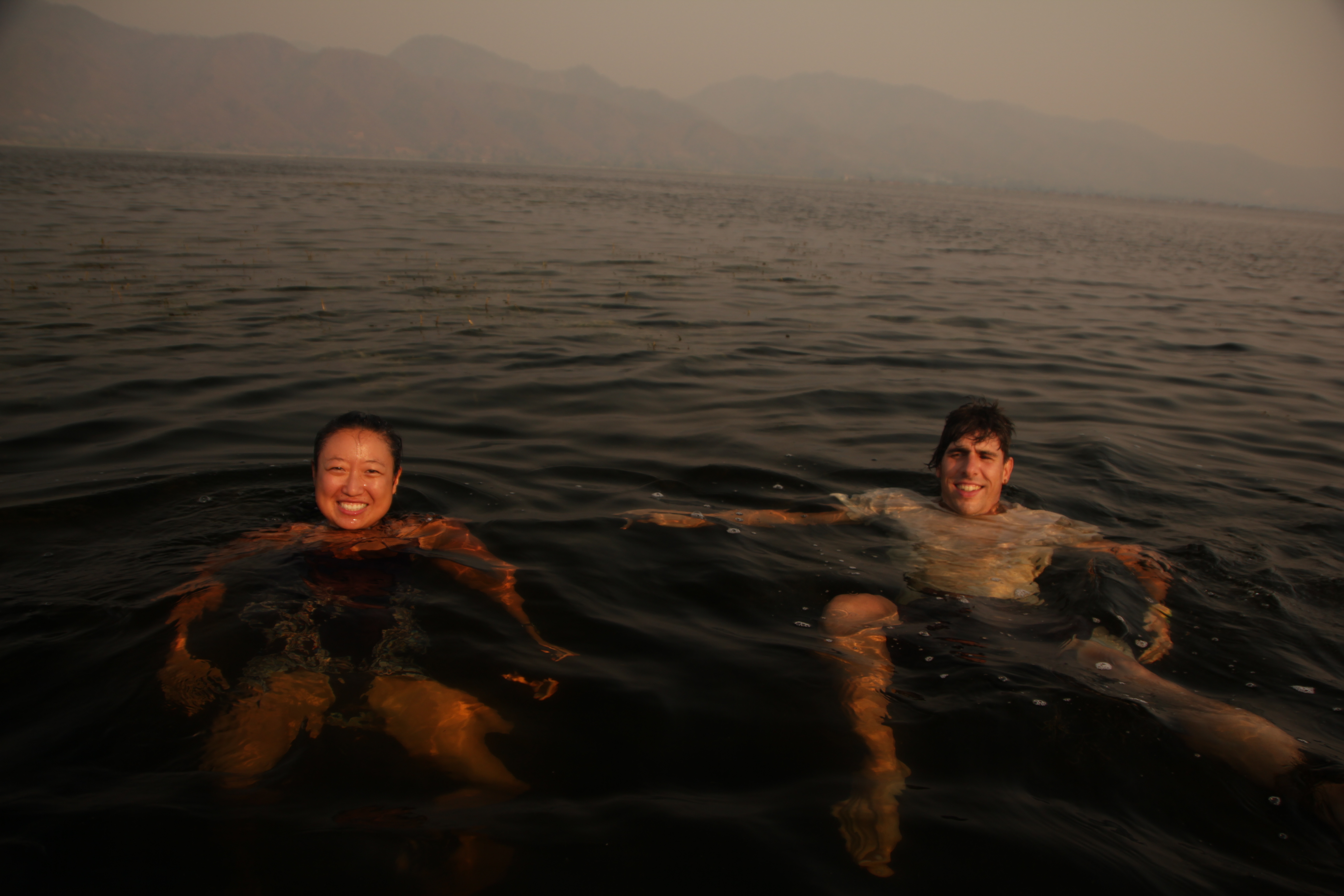
But not before we take a dip in the lake. It’s FULL of seaweed, in case you’re wondering what our odd facial expressions are about. (Photo credit: Jorge Gomez)
Upon leaving Inle Lake, I fall ill with a stomach virus that knocks me out for the remainder of our time in Myanmar. It’s really unfortunate, and I’m going to write a separate post about it later. For now I’ll just say that getting sick while traveling is the worst.
Being in Myanmar feels like traveling back a couple decades in time. There are obvious “need improvement” areas, but there are also many wonderful things about the country. I love that its everyday culture has not yet been permeated with or supplanted by outside influences. Burmese men still wear longyis instead of pants (or god-forbid, shorts) and women have Thanaka applied in patterns on their faces. The people chew betel nuts obsessively and never hesitate to flash you a bright smile with their red-stained teeth. Aside from the occasional cell phone for those who can afford it, most people live without any kind of personal tech device. Once you leave the main city center, most restaurants don’t have English menus or English-speaking staff. It’s always a surprise what will show up in a plate or bowl in front of you. Most of all, the people are unassuming and kind. Even if they don’t speak a word of English, people will smile and try to communicate with you in some way. When they see lost foreigners, they offer help, not scams. One day J breaks down and gets lost biking around Bagan and asks a passing man for directions. The man ends up towing J on his bike over 30 minutes back to our hotel. I love all these things about Myanmar and hope that at least some of them remain as the country becomes increasingly open.
A taxi ride and an airport floor
On our last night we return to Yangon with plans to find a relatively inexpensive hotel near the airport to catch our flight back to Bangkok the next morning. Upon arriving at the Yangon bus station, we have trouble finding a cab driver that speaks English. Trying to convey “hotel near the airport” with hand gestures is not as easy as you might think. Finally we warily get into a cab with a young guy who assures us with a copious amount of yes’s and head nods that he understands where we need to go. Then another guy gets into the passenger seat. Who is he? A friend? No idea. Is this even a real cab? Also questionable, as there are no meters, signs, or licenses of any kind.
We drive for a while. The driver and his friend chat happily up front as J and I grow increasingly suspicious about where we’re headed. At one point, J points out to me that he thinks the airport is to the east of our current trajectory. And so this exchange happens:
Me (to J): Are you sure?
J: I think so.
Me (to driver): Hi, excuse me. We’re going to somewhere near the airport, right?
Driver: Yes, yes.
Me: But I think the airport is that way [pointing east], no?
Silence
Me: We want to stay in a hotel close to the airport. Shouldn’t we be going in that direction?
Driver: Ok.
At the next intersection the driver makes a right, then resumes chatting with his friend. J and I look at each other, speechless.
In a different country, I would never let myself be caught in this kind of situation. It’s a real testament to the goodness of the Burmese people that I can say I honestly wasn’t worried about anything except being dropped off at a hotel NOT near the airport. We do eventually pass by the airport, calming my and J’s fears. The driver then proceeds to chauffeur us around and around searching for an appropriate place to stay. It’s tough to find. Most of the places are either five-star looking joints way beyond our budget or places that don’t accept foreign guests. Many of them also don’t speak English so the cab driver gets out at every stop and negotiates for us. We do find one hotel that will take us for about $50 a night, but we regrettably ask our driver if he can find us somewhere less expensive. He doesn’t show an ounce of annoyance, just gets back in the car and drives on.
After a good 45 minutes of this, J and I agree to take the path of least resistance and just spend the night at the airport. We have the driver drop us off at a restaurant across the street from the airport. He helps get out our bags, accepts the previously agreed fare without a word about charging us more for the extra time spent on our fruitless search, points us in the right direction, smiles and drives off. Have I mentioned how great Burmese people are?
And so we end our time in Myanmar on this airport floor, trying to choose between suffocating inside my sleeping bag or being eaten alive by the lobby full of mosquitoes. At least it’s better than the night bus.
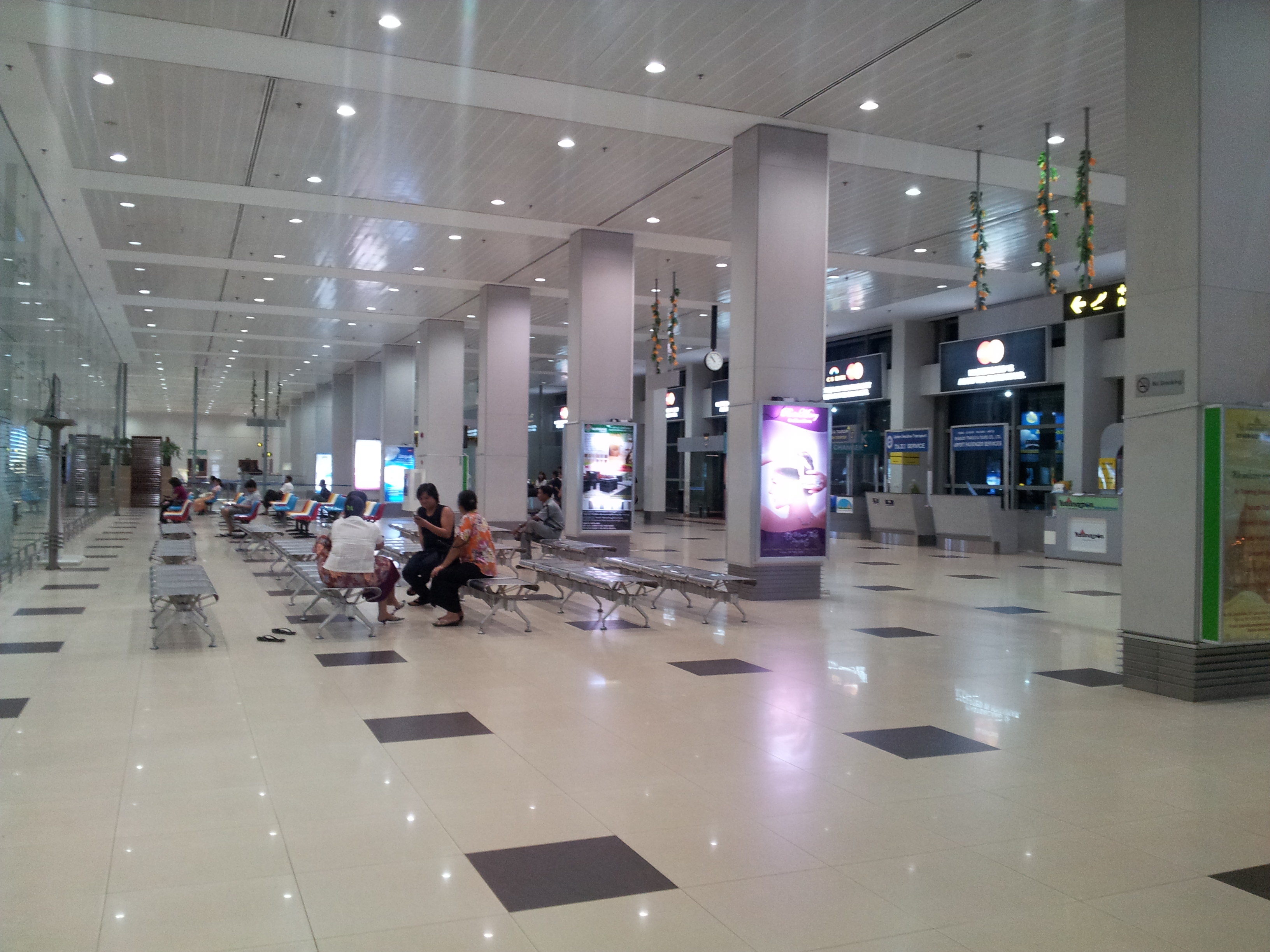
Yangon Airport
[Myanmar. April 8-18, 2013]
 Tiny Runner Travels